
Rev. Fr. Takyia Joachim
November, 2025
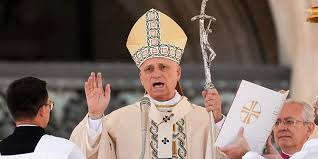
On World Mission Sunday, October 19th, 2025, Pope Leo XIV used the solemn act of canonization not just to honor the past, but to define the Church’s future. Lifting seven profoundly diverse witnesses—lay and religious, martyrs and healers—the Holy Father proclaimed that holiness and mission are inseparable: the Church’s most vital message to a world in need of grace and courage. The date, which was no coincidence, served as a crystal-clear message: holiness is a deep engagement with the world; it is love that becomes action.
Pope Leo XIV canonized seven new saints. They are men and women from diverse backgrounds—lay, religious, doctors, catechists, founders, and martyrs—including the first saint from Papua New Guinea. They are now new intercessors, new models, and new voices of hope for those still journeying on earth. The Canonization Mass, held at the start of the new Pontificate, was the Church’s official recognition of God’s present power and grace working through these lives. It was an affirmation that holiness is accessible in every vocation. The ceremony took place on October 19th, 2025, which is the annual celebration of World Mission Sunday, in St. Peter’s Square at the Vatican.
The deliberate timing on World Mission Sunday underscores the core theological claim of the new Pontiff: holiness is the first act of mission. This message challenges the comfort of our times, calling the faithful to a faith that acts, moves, and loves. As the Pope indicated, the Church was not merely celebrating history; “she was announcing her future”. The lives of the new saints serve as living proof that conversion is always possible and that one’s limitations are never an obstacle to grace.
How: The New Models of Missionary Discipleship
The seven new saints offer distinct pathways to this unified holiness-as-mission, providing concrete models for the modern Catholic, especially the young.
1. Bartolo Longo, the Apostle of the Rosary (Italy) 🇮🇹
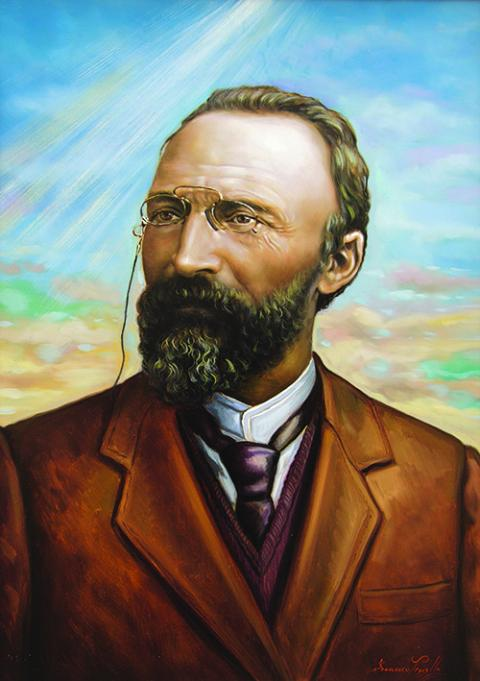
His is a story of radical conversion. Longo was a lawyer who lost his faith in a secular university setting, sinking into occultism and describing himself as a “satanic priest”. Guided back by a Dominican priest, he dedicated his life to promoting the Rosary, founding the Shrine of Our Lady of Pompeii, and combining this spiritual outreach with practical mercy by offering free legal help to the poor and building orphanages.
Reflection: Longo is a beacon of hope for anyone who feels they have gone too far astray. His life teaches that no past is too broken for grace. **]
2. Dr. José Gregorio Hernández, The Doctor of the Poor (Venezuela) 🇻🇪
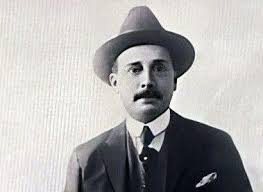
A physician, scientist, and university professor, Dr. Hernández used his brilliance for service, treating the poor for free and often paying for their medicine himself. He died after being hit by a car while delivering medicine to a sick child. His life proclaims that your profession can be your mission.
3. Maria Troncati, The Doctor of the Jungle (Ecuador Mission) 🇪🇨
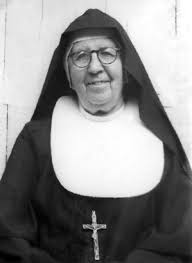
An Italian Salesian sister, Maria Troncati carried the Gospel to the Shuar people of Ecuador, where she was affectionately called “the doctor of the jungle”. Her work as a nurse, surgeon, and catechist across dangerous terrain healed both body and soul.
Reflection: Both Dr. Hernández and Sister Troncati show that your career is your mission, and that the Gospel travels best through service.
4. Vincenza Maria Poloni, The Humble Servant of Mercy (Italy) 🇮🇹
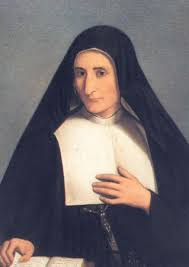
Poloni founded the Sisters of Mercy, dedicating herself to the quiet care of chronically ill women in silence and simplicity. Her holiness had no headlines.
Reflection: Poloni reminds us that mission is often hidden in daily love—that greatness can wear an apron instead of a halo.
5. Ignatius Maloyan, The Martyr Archbishop (Armenia) 🇦🇲
Martyred during the Armenian Genocide in 1915, Archbishop Maloyan refused to renounce Christ, stating: “I have lived for Him; I will die for Him”. He was executed alongside his flock, offering the ultimate witness of discipleship.
6. Peter To Rot, The Faithful Catechist (Papua New Guinea) 🇵🇬
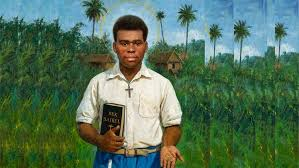
The first saint from Papua New Guinea, Peter To Rot was a husband, father of three, and catechist who defended Christian marriage and fidelity against the Japanese occupation forces during World War II. He was secretly executed for his refusal to conform.
Reflection: The blood of Maloyan and the steadfastness of To Rot proclaim that faith is not comfort; it is conviction. To Rot shows us that holiness is faithfulness under pressure. **]
7. Maria Carmen Rendiles Martínez, The Woman of the Eucharist (Venezuela) 🇻🇪
Born without a left arm, Martinez faced rejection but persevered, founding the Servants of Jesus and living a vocation centered on the Eucharist, service to priests, and teaching.
Reflection: Her story is a powerful testimony that our limitations don’t define us—love does, and that weakness is never an obstacle to holiness.
A Call to Spiritual Revolution for Our Generation
Pope Leo XIV’s canonization of these seven witnesses serves as a personal challenge: Holiness isn’t for the perfect; it’s for the willing.
The new saints call young Catholics to a spiritual revolution that begins in small, faithful steps—in classrooms, clinics, offices, and even online spaces. The ultimate question is not where we are called, but simply: What is my mission, right where I am?
As the new pontificate affirms, the Gospel is alive, and your life is your mission field.