
By Fr. Takyia Joachim
November, 2025
Introduction: The Bridge of Love
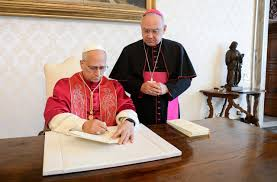
Welcome to a pastoral-journalistic review of the ideas shaping our faith and our world. On October 4th, 2025, the Feast of St. Francis of Assisi, Pope Leo XIV issued his first Apostolic Exhortation, Dilexi Te—meaning “I Have Loved You.”
The title itself is a profound affirmation, meant to be Christ speaking directly to those who are weak and marginalized, affirming their inherent dignity.
What is an Apostolic Exhortation?
Think of this document not as a strict encyclical that defines doctrine, but as an act of authoritative guidance, reflection, and a strong pastoral push from the Holy Father to his flock. It sets a tone and a direction for the new pontificate. Our mission here is to extract its theological foundation, historical roots, and, most importantly, the concrete challenges it puts before us.
The Next Step: Pope Leo XIV now takes up that thread, giving it flesh and mission. He insists the poor are not merely a problem to be solved but people to be loved—the very reflection of Christ’s heart.
The First Link: This document acts as a spiritual and theological continuation of the work begun by his predecessor, Pope Francis. Pope Francis ended his pontificate with the encyclical Dilexit Nos (“He Loved Us”), which explored the divine and human love of Christ’s Sacred Heart.
The Core Theological Claim: Sacramental Presence
At its core, Dilexi Te teaches that love for the Lord is inseparable from love for the poor.
The Pope anchors this in the words of Jesus: “The poor you will always have with you” (Mt 26:11) and “I am with you always” (Mt 28:20). For Pope Leo, this means that Christ’s presence among the poor is not symbolic—it is sacramental.
- A Call to Holiness: To serve the poor is to touch the living Christ. This is not optional charity; it is “an essential path to holiness”.
- The Mirror of Discipleship: Love for the poor is not an accessory to Christian life; it is “the evangelical hallmark of a Church faithful to the heart of God”. In other words, it is the mirror of our discipleship.
- Unmistakable Claim: One of the most striking lines in the document makes an unmistakable theological claim: “The poor are not a sociological category but the very flesh of Christ.” This demands that our faith must take flesh—the same flesh that suffers, hungers, and hopes
The Multi-Faceted Face of Poverty
The document expands our understanding of poverty beyond the merely material. It is multifaceted:
- Material Poverty (lack of resources)
- Social Poverty (exclusion, being invisible)
- Moral and Spiritual Poverty
- Rights-Based Poverty: Lacking access to basic justice, legal representation, education, and healthcare.
Pope Leo XIV warns that the greatest discrimination the poor suffer is “the lack of spiritual care,” insisting that the preferential option must include “preferential pastoral and spiritual care.” This is where theology meets tenderness.
Challenging the Systems: From Charity to Prophetic Love
The Apostolic Exhortation takes a bold turn toward the present, denouncing “the dictatorship of an economy that kills.” It forcefully argues that poverty is not merely accidental—it is often the result of human choices, systems, and ideologies. It is not enough to relieve symptoms; the Church must challenge causes.
- Rejecting False Meritocracy: The Pope calls out “the false meritocracy”—the toxic belief that people are poor because they deserve to be, or because of a lack of personal merit.
- A Civilization’s Soul: He states, “To tolerate millions dying of hunger is a sign of a civilization that has lost its soul.”
This leads to a redefinition of love as prophetic love —a love that is transformative, one that “breaks barriers, brings close the distant, reconciles enemies, and builds bridges”.
Grounded in Jesus’s Life
Chapter Two grounds this prophetic love in the life of Jesus:
- Jesus worked as a tēktōn (carpenter/craftsman), earning his living by manual labor and considered inferior to farmers.
- His family offered the two turtle doves prescribed by the Law for poor families at the Temple.
- He was an itinerant teacher with “nowhere to lay his head” (Mt 8:20).
The preferential option for the poor is thus embedded right in Jesus’s own life story. Your love for your poor neighbor is the ultimate acid test of your authentic love for God.
III. The Church’s Credibility: Protagonists, Not Objects
Chapter Three shows this commitment is not new, citing witnesses like St. Lawrence, the deacon, who presented the poor as the Church’s true treasures. The Pope quotes St. John Chrysostom’s radical line: Not giving to the poor is stealing from them.
- A Long Tradition: The document highlights historical movements—from the early Church’s organized care for the sick (groundwork for hospitals) to groups like the Trinitarians, who ransomed captives, a historical precursor to modern anti-trafficking work.
- Right Up to the Present: It affirms the work of popular movements—groups of the poor organizing themselves to fight for land, labor, and lodging, tackling the structural causes of poverty.
A Fundamental Shift in Perspective
This historical continuity leads to the key challenge of Chapter Four: The poor must be seen not just as objects of our charity, but as subjects.
- Active Agents: They are active agents, protagonists capable of creating their own culture and solutions.
- Evangelized by the Poor: This is a fundamental shift: we are called not just to help the poor, but to be evangelized by their wisdom and experience.
IV. The Challenge of Indifference and the Healing of the Heart
The final chapter, A Constant Challenge, zooms back to individual responsibility, reflecting on the Parable of the Good Samaritan.
The key modern failing, according to Pope Leo, is indifference—just walking by on the other side. He worries we have become ‘illiterate’ in caring for the frail, losing the ability to see or read the signs of suffering around us.
The Antidote: Personal Encounter
Though affirming the need for structural change, the Pope strongly defends the value of simple personal gestures, specifically Almsgiving.
- Not a Solution, But an Encounter: While almsgiving may not solve big structural issues on its own, it is vital because it’s an act of encounter.
- Spiritual Discipline: It is a spiritual discipline that helps break down our indifference, fosters empathy, and forces us to look the poor in the eye and recognize the face of Christ. It prevents our hearts from hardening.
V. The Mind and Motif of Pope Leo XIV
What does the issuance of this document tell us about the new Pontiff?
Having served for years in Peru, Pope Leo XIV brings with him the Latin American discernment tradition—a tradition that has always insisted the Church must see the world “from the side of the poor.”
He defines his papacy around one poetic but demanding line:
“The Church is only fully the Bride of the Lord when she is also the Sister of the Poor.”
This is the motif—the soul of this pontificate. The Church’s credibility depends on her closeness to the poor.
Three Radical Invitations
For those of us asking how to live Dilexi Te, Pope Leo offers three simple but radical invitations:
- Commitment to Closeness: Spend real time with those who suffer. Presence is the first form of love. Don’t outsource compassion.
- Structural Advocacy: Speak out against systems that harm life. As Pope Leo says: “Love that never disturbs injustice is not yet Christian.”
- Cultivate the Heart: Practice almsgiving for formation, not for pity. Let generosity soften your spirit and help you see the face of Christ.
Closing Reflection: The Ultimate Question
Dilexi Te is not a policy document; it is a love letter from Christ, through the Pope, to the Church and the world.
Its ultimate question is intensely personal : Can the poor say of us, “Yes, the Church has loved me?”
The measure of our faith—of every act of devotion—is whether the poor can feel, in our presence, the echo of Christ’s words: “I have loved you.”
Fr. Joachim Takyia is the host of Church Commentary.